Showing posts with label Transitions. Show all posts

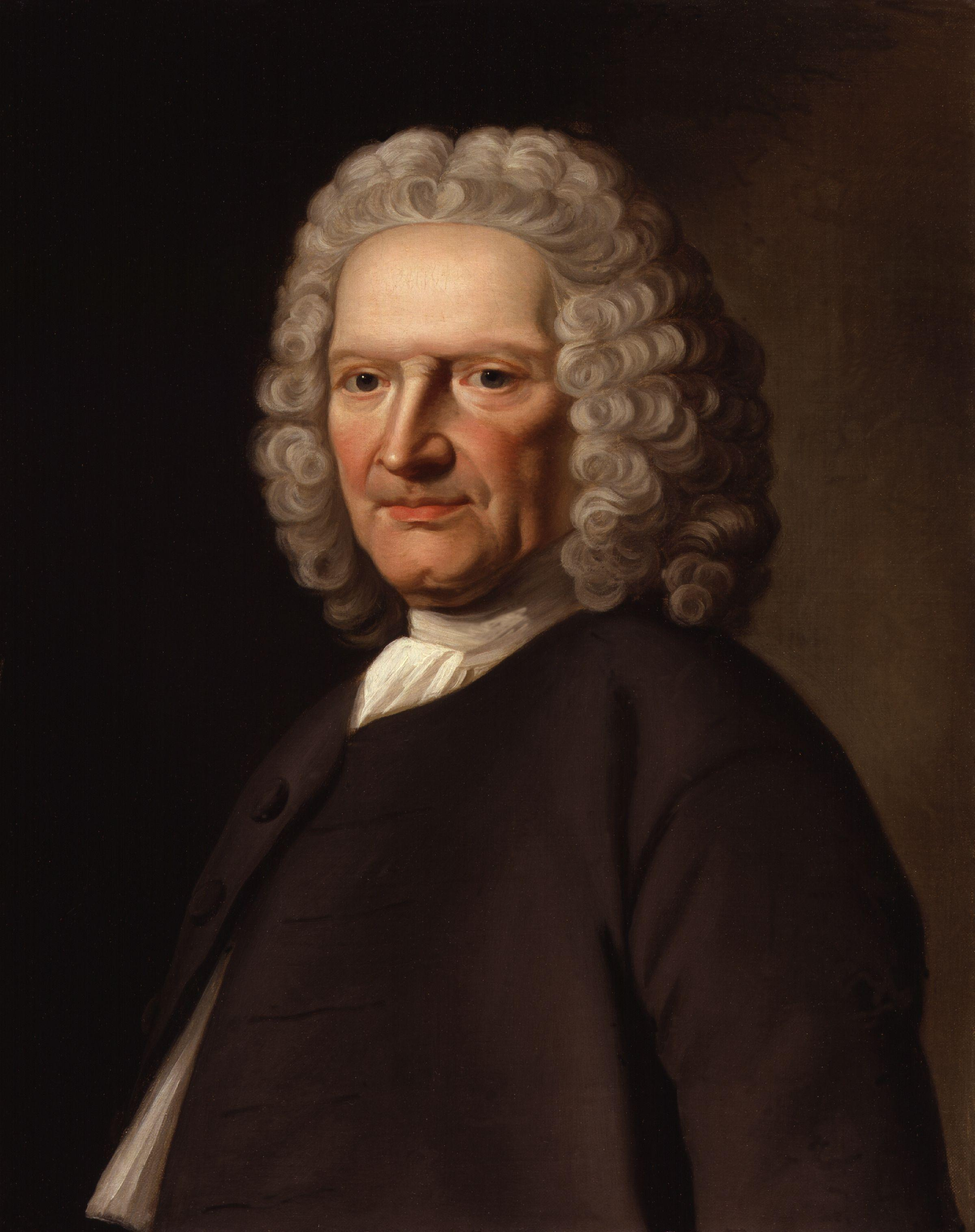
John Witherspoon on Method: "Infelix operis summa quia ponere totum nescit"

Denique sit quod vis simplex dumtaxat et unum:
be your subject what it will, let it be merely simple and uniform.
Very practical advice in the Works of the Rev. John Witherspoon, Lecture XI (on Eloquence), vol iii, p. 443.

...The next division of the oratorial art, is disposition or distribution. This is a matter of the utmost moment, and upon which instruction is both necessary and useful. By disposition as a part of the oratorial art, I mean order in general, in the whole of a discourse, or any kind of composition, be it what it will. As to the parts of which a single speech or oration consists, they will be afterwards considered. Before I proceed to explain or point out the way to attain good order, I would just mention a sew of its excellencies.

(1.) Good order in a discourse gives light, and makes it easily understood. If things are thrown together without method, each of them will be less understood, and their joint influence in leading to a conclusion will not be perceived. It is a noble expression of Horace, who calls it lucidus ordo, clear order. It is common to say, when we hear a confused discourse, "It had neither head nor tail, I could not understand what he would be at."

(2.) Order is necessary to force, as well as light. This indeed is a necessary consequence of the other, for we shall never be persuaded by what we do not understand. Very often the force of reasoning depends upon the united influence of several distinct propositions. If they are arranged in a just order, they will all have their effect, and support one another; if otherwise, it will be like a number of men attempting to raise a weight, and one pulling at one time, and another at another, which will do just nothing; but if all exert their power at once, it will be easily overcome.

(3.) Order is also useful for assisting memory. Order is necessary even in a discourse that is to have a transient effect; but if any thing is intended to produce a lasting conviction, and to have a daily influence, it is still more necessary. When things are disposed in a proper order, the same concatenation that is in the discourse, takes place in the memory, so that when one thing is remembered, it immediately brings to remembrance what has an easy and obvious connection with it. The association of ideas linked together by any tie is very remarkable in our constitution, and is supposed to take place from some impression made upon the brain. If we have seen two persons but once, and seen them both at the same time only, or at the same place only, the remembrance of the one can hardly be separated from the other. I may also illustrate the subject by another plain instance. Suppose I desire a person going to a city, to do three or four things for me that are wholly unconnected, as to deliver a letter to one person—to visit a friend of mine, and to bring me notice how he is—to buy a certain book for me, if he can find it—and to see whether any ship be to sail for Britain soon,—it is very possible he may remember some of them, and forget the others; but if I desire him to buy me a dozen of silver spoons, to carry them to an engraver to put my name upon them, and get a case to put them in, if he remembers one article, it is likely he will remember all of them. It is one of the best evidences that a discourse has been composed with distinctness and accuracy, if after you go away you can remember a good deal of it; but there are sometimes discourses which are pompous and declamatory, and which you hear with pleasure, and some sort of approbation, but if you attempt to recollect the truths advanced, or the arguments in support of them, there is not a trace of them to be found.

(4.) Order conduces also very much to beauty. Order is never omitted when men give the principles of beauty, and confusion is disgusted just on its own account, whatever the nature of the confused things may be. If you were to see a vast heap of fine furniture of different kinds lying in confusion, you could neither perceive half so distinctly what was there, nor could it at all have such an effect, as if every thing was disposed in a just order, and placed where it ought to stand; nay, a much smaller quantity, elegantly disposed, would exceed in grandeur of appearance a heap of the most costly things in nature.

(5.) Order is also necessary to brevity. A confused discourse is almost never short, and is always filled with repetitions. It is with thought in this respect, as with things visible, for, to return to the former similitude, a confused heap of goods of furniture fills much more room than when it is arranged and classed in its proper order, and every thing carried to its proper place. 

   Having shown the excellence of precision and method, let us next try to explain what it is; and that I may have some regard to method while I am speaking of the very subject, I shall take it in three lights: 

1. There must be an attention to order in the disposition of the whole piece. Whatever the parts be in themselves, they have also a relation to one another, and to the whole body, (if I may speak so), that they are to compose. Every work, be it what it will, history, epic poem, dramatic poem, oration, epistle, or essay, is to be considered as a whole; and a clearness of judgment in point of method, will decide the place and proportion of this several parts of which they are composed. The loosest essay, or where form is least professed or studied, ought yet to have some shape as a whole; and we may say of it, that it begins abruptly or ends abruptly, or some of the parts are misplaced. There are often to be seen pieces in which good things are said, and well said, and have only this fault, that they are unseasonable and out of place. Horace says, in his Art of Poetry, what is equally applicable to every sort of composition, Denique sit quod vis simplex duntaxat et unum [be your subject what it will, let it be merely simple and uniform]; and shortly after, Infelix operis summa, quia ponere totum nesciet [he doesn't know how to accommodate the parts to the whole]. This judgment in planning the whole, will particularly enable a person to determine both as to the place and proportion of the particular parts, whether they be not only good in themselves, but fit to be introduced in such a work; and it will also (if I may speak so) give a color to the whole composition. The necessity of order in the whole structure of a piece, shows that the rule is good which is given by some, that an orator, before he begin his discourse, should concentrate the subject as it were, and reduce it to one single proposition, either expressed, or at least conceived in his mind. Every thing should grow out of this as its root, if it be in another principle to be explained; or refer to this as its end, if it be a point to be gained by persuasion. Having thus stated the point clearly to be handled, it will afford a sort of criterion whether any thing adduced is proper or improper. It will suggest the topics that are just and suitable, as well as enable us to reject whatever is in substance improper, or disproportionate to the design. Agreeably to this principle, I think, that not only the subject of a single discourse should be reducible to one proposition, but the general divisions or principal heads should not be many in number. A great number of general heads both burdens the memory, and breaks the unity of the subject, and carries the idea of several little discourses joined together, or to follow after one another.

2. Order is necessary in the subdivisions of a subject, or the way of stating and marshalling of the several portions of any general head. This is applicable to all kinds of composition, and all kinds of oratory, sermons, law-pleadings, speeches. There is always a division of the parts, as well as of the whole, either expressed formally and numerically, or supposed, though suppressed. And it is as much here as anywhere, that the confusion of inaccurate writers and speakers appears. It is always necessary to have some notion of the whole of a piece; and the larger divisions being more bulky, (so to speak), disposition in them is more easily perceived; but in the smaller, both their order and size is in danger of being less attended to. Observe, therefore, that to be accurate and just, the subdivisions of any composition, such I mean as are (for example) introduced in a numerical series, 1, 2, 3, &c . should have the following properties:

(1.) They should be clear and plain. Every thing indeed should be clear as far as he can make it, but precision and distinctness should especially appear in the subdivisions, just as the bounding lines of countries in a map. For this reason the first part of a subdivision should be like a short definition, and when it can be done, it is best expressed in a single term; for example, in giving the character of a man of learning, I may propose to speak of his genius, his erudition, his industry or application.

(2.) They should be truly distinct; that is, everybody should perceive that they are really different from one another, not in phrase or word only, but in sentiment. If you praise a man first for his judgment, and then for his understanding, they are either altogether or so nearly the same, or so nearly allied, as not to require distinction. I have heard a minister, on John, xvii. 11. "Holy Father," &c . In showing how God keeps his people, says (1). He keeps their feet: "He shall keep thy feet from falling." (2.) He keeps their way: "Thou shalt keep him in all his ways." Now, it is plain, that these are not two different things, but two metaphors for the same thing. This indeed was faulty also in another respect; for a metaphor ought not to make a division at all.

(3.) Subdivisions should be necessary; that is to say, taking the word in the loose and popular sense, the subject should seem to demand them. To multiply divisions, even where they may be made really distinct, is tedious, and disgustful, unless where they are of use and importance to our clearly comprehending the meaning, or feeling the force of what is said. If a person, in the map of a country, should give a different color to three miles, though the equality of the proportion would make the division clear enough, yet it would appear disgustingly superfluous. In writing the history of an eminent person's life, to divide it into spaces of ten years, perhaps, would make the view of the whole more exact; but to divide it into single years or months, would be finical and disagreeable. The increase of divisions leads almost unavoidably into tediousness.

(4.) Subdivisions should be coordinate; that is to say, those that go on in a series, 1, 2, 3, &c. should be as near as possible similar, or of the same kind. This rule is transgressed, when either the things mentioned are wholly different in kind, or when they include one another. This will be well perceived, if we consider how a man would describe a sensible subject, a county for example; New-Jersey contains, 1. Middlesex. 2. Somerset county. 3. The townships of Princeton. 4. Morris county. So, if one, in describing the character of a real Christian, should say, faith, holiness, charity, justice, temperance, patience, this would not do, because holiness includes justice, &c. When, therefore, it seems necessary to mention different particulars that cannot be made coordinate, they should be made subordinate.

(5.) Subdivisions should be complete, and exhaust the subject. This, indeed, is common to all divisions, but is of most importance here, where it is most neglected. It may be said, perhaps, How can we propose to exhaust any subject? By making the divisions suitable, particularly in point of comprehension, to the nature of the subject; as an example, and to make use of the image before introduced, of giving an account of a country, I may say, the province of New Jersey consists of two parts, East and West Jersey. If I say it consists of the counties of Somerset, &c. I must continue till I have enumerated all the counties, otherwise the division is not complete. In the same manner, in public speaking, or any other composition, whatever division is made, it is not legitimate, if it does not include or exhaust the whole subject; which may be done, let it be ever so great. For example: True religion may be divided various ways, so as to include the whole; I may say, that it consists of our duty to God, our neighbor, and ourselves; or, I may make but two, our duty to God and man, and divide the last into two subordinate heads, our neighbor, and ourselves ; or, I may say, it consists of faith and practice; or, that it consists of two parts, a right frame and temper of mind, and a good life and conversation.

(6.) Lastly, the subdivisions of any subject should be connected, or should be taken in a series or order, if they will possibly admit of it. In some moral and intellectual subjects, it may not be easy to find any series or natural order, as in an enumeration of virtues, justice, temperance, and fortitude. Patience, perhaps, might as well be enumerated in any other order; yet there is often an order that will appear natural, and the inversion of it unnatural; as we may say, injuries are done many ways to a man's person, character, and possessions. Love to others includes the relation of family, kindred, citizens, countrymen, fellow-creatures.

3. In the last place, there is also an order be observed in the sentiments, which makes the illustration or amplification of the divisions of discourse. This order is never expressed by numerical division, yet it is of great importance, and beauty and force will be particularly felt. It is if I may speak so, of a finer and more delicate nature than any of the others, more various, and harder to explain. I once have said, that all reasoning is of the nature of a syllogism, which lays down principles, makes comparisons, and draws the conclusion. But we must particularly guard against letting the uniformity and formality of a syllogism appear. In general, whatever establishes any connection, so that it makes the sentiments give rise to one another, is the occasion of order; sometimes necessity and utility point out the order as a good measure: As in telling a story, grave or humorous, you must begin by describing the persons concerned, mentioning just as many circumstances of their character and situation as are necessary to make us understand the facts to be afterwards related. Sometimes the sensible ideas of time and place suggest an order, not only in historical narrations, and in law-pleadings, which relate to facts, but in drawing of characters, describing the progress and effects of virtue and vice, and even in other subjects, where the connection between those ideas and the thing spoken of is not very strong. Sometimes, and indeed generally, there is an order which proceeds from things plain, to things obscure. The beginning of a paragraph should be like the sharp point of a wedge, which gains admittance to the bulky part behind. It first affirms what every body feels, or must confess, and proceeds to what follows as a necessary consequence. In fine, there is an order in persuasion to a particular choice, which may be taken two ways with equal advantage, proceeding from the weaker to the stronger, or from the stronger to the weaker: As in recommending a pious and virtuous life, we may first say it is amiable, honorable, pleasant, profitable, even in the present life; and, to crown all, makes death itself a friend, and leads to a glorious immortality: or, we may begin the other way, and say it is the one thing needful, that eternity is the great and decisive argument that should determine our choice, though every thing else were in favor of vice; and then add, that even in the present life, it is a great mistake to think that bad men are gainers, &c. This is called sometimes the ascending and descending climax. Each of them has its beauty and use. It must be left to the orator's judgment to determine which of the two is either fittest for the present purpose, or which he finds himself at that time able to execute to the greatest advantage.

REFERENCE

HERE

John Ward on Digression and Transition

Of Digression, Transition, and Amplification.
(from A System of Oratory)

The number, order, and nature of the parts, which constitute a complete and regular oration, I have endeavored to explain in several preceding lectures. But there are two or three things yet remaining, very necessary to be known by an orator, which seem most properly to come under the second branch of his art. And these are Digression, Transition, and Amplification, upon each of which I shall now treat; not that they are connected with each other, but because I think all, that is requisite to be said concerning them, may be comprised in one discourse.

Digression then, as defined by Quintilian, is, A going off from the subject we are upon to some different thing, which may however be of service to it. We have a very beautiful instance of this in Ciceros defence of Coelius, who was accused of having first borrowed money of Clodia, and then engaging her servants to poison her. Now as the proof of the fact depended upon several circumstances, the orator examines them separately; and shows them to be all highly improbable. 
How, says he, was the design of this poison laid? Whence came it f how did they get its by whose assistance, to whom, or where was it delivered? Now to the first of these queries he makes the accuser give this answer: They say Coelius had it at home, and tried the force of it upon a stave provided on purpose, whose sudden death proved the strength of the poison
Now, as Cicero represents the whole charge against Coelius as a fiction of Clodia, invented out of revenge for some flights he had put upon her; to make this the more probable he insinuates, that she had poisoned her husband, and takes this opportunity to hint it, that he might show how easy it was for her to charge another with poisoning a servant, who had done the same to her own husband. But not contented with this, he steps out of his way, and introduces some of the last words of her husband Metellus, to render the fact more barbarous and shocking, from the admirable character of the man. This digression is brought in immediately upon the words I last read from Cicero, in the following manner: 
O immortal gods, why do you sometimes wink at the greatest crimes of mankind, or delay the punishment of them to futurity! For I saw, I myself saw sand (it was the dolefulest scene of my whole life) when Metellus was taken from the bosom of his country; and when he, who thought himself born to be serviceable to this state, within three days after he had appeared with such advantage in the senate, in the forum, and every where in public, was snatched from us in the flower of his age, and prime of his strength and vigor. At which time, when he was about to expire, and his mind had lost the sense of other things, still retaining a concern for the public, he looked upon me, as I was all in tears, and intimated in broken and dying words, how great a storm hung over the city, and threatened the whole state, often striking the wall, which separated his house from that of Quintus Catulus, and frequently calling both upon him and me, and seeming, to grieve not so much at the approach of his own death, as that both his country and I should be deprived of his assistance. Had he not been wickedly taken off on a sudden, how would he after his consulship have withstood the fury of his kinsman, Publius Clodius, who, while in that office, threatened, in the hearing of the senate, to kill him with his own hand, when he first began to break out. And will this woman dare to come out of those doors, and talk of the force of poison? will not she fear, left the house itself should speak the villainy? will not She dread the conscious walls, nor that sad and mournful night? But I return to the accusation
And then he proceeds to consider, and refute the several circumstances of the accusation. What I have therefore cited here, was no part of his argument; but having mentioned the charge of poison, he immediately takes occasion to introduce it, in order to excite the indignation of the hearers against Clodia, and invalidate the prosecution, as coming from a person of her character. Digression cannot properly be said to be a necessary part of a discourse, but it may sometimes be very convenient, and that upon several accounts.
As first, where a subject is of itself flat and dry, or requires close attention, it is of use to relieve and unbend the mind by something agreeable and entertaining. For which reason Quintilian observes, that the orators of his time generally made an excursion in their harangues upon some pleasing topic, between the narration and the proof. But he condemns the practice, as too general; for while they seemed to think it necessary, it obliged them sometimes to bring in things trifling and foreign to the purpose. Besides, a Digression is confined to no one part of a discourse, but may come in any where, as occasion offers; provided it fall in naturally with the subject, and be made some way subservient to it. We never meet with it in Cicero, without some evident and good reason. I have already shown the use he makes of it, in the example above mentioned. So in his prosecution of Verres, for his barbarous and inhuman outrages against the Sicilians, he takes an occasion to launch out into a beautiful description of the island, and to recount the advantages, which accrued from it to the Romans. His subject did not necessarily lead him to this, but his view in it was to heighten and aggravate the charge against Verres .
Again, as a Digression ought not to be made without sufficient reason, so neither should it be too frequent. And he who never does it, but where it is proper and useful, will not often see occasion for it. Frequently to leave the subject, and go off to other things,, breaks the thread of the discourse, and is apt to introduce confusion. Indeed some kinds of writing admit of a more frequent use of digressions than others. In history they are often very serviceable. For as that consists of a series of facts, and a long continued narrative without variety is apt to grow dull and tedious; it is necessary at proper distances to throw in something entertaining, in order to enliven it, and keep up the attention. And accordingly we find the best historians often embellish their writings with descriptions of cities, rivers, and countries, as likewise with the speeches of eminent persons upon important occasions, and other ornaments, to render them the more pleasing and delightful. Poets still take a greater liberty in this respect; for as their principal view is most commonly to please, they do not attend so closely to connection; but as an image offers itself, which may be agreeably wrought up, they bring it in, and go off more frequently to different things, than other writers.

Another property of a Digression is, that it ought not to be too long, lest the hearers forget what preceded, before the speaker returns again to his subject. For a digression being no principal part of a discourse, nor of any further use, than as it serves some way or other to enforce, or , illustrate the main subject; it cannot answer this end, if it be carried to such a length, as to cause that either to be forgot, or neglected. And every ones memory will not serve him to connect together two parts of a discourse, which lie at a wide distance from each other. The better therefore to guard against this, it is not unusual with orators, before they enter upon a digression of any considerable length, to prepare their hearers, by giving them notice of it, and sometimes desiring leave to divert a little from the subject. And so likewise at the conclusion they introduce the subject again by a short transition. Thus Cicero in the example cited above, when he has finished his digression concerning the death of Metellus, proceeds to his subject again with these words: But I return to the accusation.
Indeed we find orators sometimes, when sore pressed, and the cause will not bear a close scrutiny, artfully run into digressions with a design to divert the attention of the hearers from the subject, and turn them to a different view. And in such cases, as they endeavor to be unobserved, so they do it tacitly without any transition, or intimation of their design; their business being only to get clear of a difficulty, till they have an opportunity of entering upon some fresh topic. I do not mention this as a conduct proper for imitation, though it is fit to be remarked, in order to guard against it.


But as Transitions are often used not only aster a Digression, but likewise upon other occasions, I shall explain the nature of them a little more particularly. A Transition therefore is, A form of speech, by which the speaker in a few words tells his hearers both what he has said already, and what he next designs lo say. Where a discourse consists of several parts, this is often very proper in passing from one to another, especially when the parts are of a considerable length; for it assists the hearers to carry on the series of the discourse in their mind, which is a great advantage to the memory. It is likewise a great relief to the attention, to be told when an argument is finished, and what is to be expected next. And therefore we meet with it very frequently in history. But I consider it at present only as made use of by orators. Cicero, as I have had occasion to observe formerly, divides his oration for the Manilian law into three parts, and pro poses to speak, first of the nature of the war against king Mithridates, then of its greatness, and lastly of the choice of a general. And when he has gone through the first head, which is pretty long, he connects it with the second, by this short transition: Having shown the nature of the war, I shall now speak a few things of its greatness. And again, at the conclusion of his second head, he reminds his hearers of his method in the following manner: I think I have sufficiently shown the necessity of this war from the nature of it, and the danger of it from its greatness. What remains is to speak concerning the choice of a general, proper to be entrusted with it. And in his second oration against Catiline, who had then left Rome, having at large described his conduct and designs, he adds: 
But why do I talk so long concerning one enemy, and such an one; who owns himself an enemy, and whom I do not fear, since, what I always desired, there is now a wall between us; and say nothing of those, who conceal themselves, who remain at Rome, and are among us
And then he proceeds to give an account of the other conspirators. But sometimes in passing from one thing to another, a general hint of it is thought sufficient to prepare the hearers, without particularly specifying what has been said, or is next to follow. Thus Cicero in his second Philippic says: But those things are old, this is yet fresh. And again But I have insisted too long upon trifles, let us come to things of greater moment. And at other times, for greater brevity, the transition is imperfect, and mention made only of the following head, without any intimation of what has been said already. As in Cicero's defence of Muraena, where he says: I must now proceed to the third part of my oration concerning the charge of bribery. And soon after: I come now to Cato, who is the support and strength of this charge.

On Transitions


(1) (most) Transitions have two parts and thus perform two tasks:

* Recapitulate + Announce

Here's a few definitions and examples from Sonnino, 180-11

Cicero: When what as been said is briefly recalled and we briefly propound what is to follow...This gives emphasis to our argument and makes it more memorable. Ad Herenium IV, 35

Wilson: When we go from one matter to another, we use this kind of phrase. Ex: "I have told you the cause of this evil, now I will tell you a remedy for the same". 182.

Scaliger: This figure adds nothing to the meaning but simply repeats what has been said and introduces what will be said. III, lxxvi.

We now turn to laws:

Robert Sanderson, Minister at Lincoln who wrote the textbook Logicae Artis Compendium that Isaac Newton studied, said [Editio Nona. (1680) p. 200]:
Lex Connexionis. Singulae partes Doctrinae aptis transitionibus connectantur. Crebris enim interruptionibus turbantur intellectus et memoria; apta vero colligatione et utrumque juvabitur, et Methodi ratio manifesta fiet. Operae facturus pretium qui docet, Methodi connexionem et rationem universam tabula aliqua sive diagraphe compendiaria discipulis repraesentabit.
The Law of Connections. Transitions aptly connect the individual parts of the message. For the frequent discontinuities (interruptions) disturbe the intellect and the memory. But the suitable colligation (bond/connection/band/conjunction) is the delight of the one and the other and the reasons of the Method become apparent. It will be rewarded he who represents the method of connexions and all the reasons to the disciples by means of table and diagraphs.

And also, Alsted in Systema Mnemonicum Duplex, 106-7:
Prima lex est lex homogeniae... secunda lex dicitur coordinationis...tertia lex dicitur transitionis. 
Milton says:
And if a rather long explication intervenes between these, they are to be joined together by bands of transition, for this restores and refreshes the hearer. 
A transition is either perfect or imperfect. One is perfect which briefly shows both what has been said and what follows, as does the beginning of this second book: "Up to this point has been treated the first part of the art of logic" etc. An imperfect transition is that which shows in some other way merely what has been said or what follows, such as that at the beginning of book i, chapter : "Simple arguments are as I have said" etc. 
So they are:
  1. Perfect: It has both parts
  2. Imperfect: Have only one part
(1b) There's another type of transition that introduces a digression that hinges on one term/thought of the last sentence, and in the next paragraph starts the digression rephrasing that term/idea and ellaborates it. 

EXAMPLES: (From Ramus Logicke, XVI) from Virgil Georgics, II
Thus far the tilth of fields and stars of heaven;
Now will I sing thee, Bacchus, and, with thee, 
And also (Georgics, III): (Imperfect: without the conclusion 
Thee too, great Pales, will I hymn, and thee, Amphrysian shepherd, worthy to be sung, 
And also (Georgics IV) 

Of air-born honey, gift of heaven, I now 
Take up the tale. 

And Cicero's Orator:
Since, therefore, we have thus shown the cause, we will now, if you please, explain the nature of it; 
And also (imperfect for it lacks an epilogue):
But now let us come to that worthy praetor and to those faults, which be more manifest to those that be here present, then to me although I have studied and prepared myself to declare the same
And also
there are many thing honorable judges which of necessity I most pretermit ...
 (2) Their goal is to guide and refresh the reader.

Therefore all that contributes to give:
  1. A pause
  2. A bird view of the overall plan of the text so far
  3. An explanation
  4. A short digression 
Can be used to. It's a sort of stop and dialogue with the reader to provide him with what he needs to effectively understand the plan and keep reading.

(3) When Milton explained how the Method properly arranges the prior and the posterior axioms, (i.e. dispositio), or the antecedent and consequent, he touches on transitions (Logic, II, XVII, p. 473 Columbia Edition). He indicates that we speak of the prior and posterior in five modes, that is the criteria to arrange them:
    person_poet_john_milton.jpg
  1. According to time: as an old man is before a youth [sic]. 
  2. According to nature: as a cause is before an effect, a genus before a species.
  3. According to consecutiveness: what is given when something else is necessarily given, (e.g. sun and light) and there's two possible (opposed) cases:
    1. A thing may be before in production: parts before the whole, simple before the composite, means before the end.
    2. A thing may be before in intention: the whole before the parts, compound before the simple, the end before the means.
  4. Anything is prior in disposition or place which is nearer the beginning: as in narration, before in dignity, (magistrate to the citizen).
  5. A thing is prior in cognition which is easier to grasp, either in itself or in us
(4) There are 3 classes of transitions, related to the granularity of the discourse.
  1. Transitions for the axiom: it's the vinculum that joins the consequent with the antecedent
  2. Transitions for the argument: joins axioms (minor and major premises)
  3. Transitions for the method: it's the broadest and includes all the possibilities mentioned above and below. 
(5) A very useful account of overall method and transitions is given by Dr. Johnson:

"...It must begin, where it may be made intelligible without introduction; and end, where the mind is left in repose, without expectation of any farther event. The intermediate passages must join the last effect to the first cause, by a regular and unbroken concatenation ; nothing must be therefore inserted which does not apparently arise from something foregoing, and properly make way for something that succeeds it. 
  This precept is to be understood in its rigor only with respect to great and essential events, and cannot be extended in the same force to minuter circumstances and arbitrary decorations, which yet are more happy, as they contribute more to the main design; for it is always a proof of extensive thought and accurate circumspection, to promote various purposes by the same act; and the idea of an ornament admits use, though it seems to exclude necessity. 
  Whoever purposes, as it is expressed by Milton, to build the lofty rhyme, must acquaint himself with this law of poetical architecture, and take care that his edifice be solid as well as beautiful; that nothing stand single or independent, so as that it may be taken away without injuring the rest ; but that, from the foundation to tho pinnacles, one part rest firm upon another." #139. Tuesday July 16, 1751.

(6) Collingwood nicely observes that:

"Here lies the difference between the desultory and casual thinking of our unscientific consciousness and the orderly and systematic thinking we call science. In unscientific thinking our thoughts are coagulated into knots and tangles; we fish up a thought out of our minds like anchor foul of its own cable, hanging upside-down and draped in seaweed with shellfish sticking to it, and dump the whole thing on deck quite pleased with ourselves for having got it up at all. Thinking scientifically means disentangling all this mess, and reducing a knot of thoughts in which everything sticks together anyhow to a system or series of thoughts in which thinking the thoughts is at the same time thinking the connexions between them. Logicians have paid a great deal of attention to some kinds of connexion between thoughts, but to other kinds not so much." An Essay on Metaphysics, 22

(7) There are three main locations for them (adapted from reference below):
  • Transitions within paragraphs: Act as cues by helping readers to anticipate what is coming (announces) before they read it. Within paragraphs, transitions tend to be single words or short phrases. (see table below)
  • Transitions between paragraphs: Summarizes the previous paragraph (recapiltulates) and suggesting something of the content of the paragraph that follows (announces). It can be a word or two (however, for example, similarly), a phrase, or a sentence. Transitions can be at the end of the first paragraph, at the beginning of the second paragraph, or in both places.
  • Transitions between sections: It may be necessary to include transitional paragraphs that summarize for the reader the information just covered (recapitulates) and specify the relevance of this information to the discussion in the following section (announces).
LOGICAL RELATIONSHIPTRANSITIONAL EXPRESSION
Similarityalso, in the same way, just as … so too, likewise, similarly
Exception/Contrastbut, however, in spite of, on the one hand … on the other hand, nevertheless, nonetheless, notwithstanding, in contrast, on the contrary, still, yet
Sequence/Orderfirst, second, third, … next, then, finally
Timeafter, afterward, at last, before, currently, during, earlier, immediately, later, meanwhile, now, recently, simultaneously, subsequently, then
Examplefor example, for instance, namely, specifically, to illustrate
Emphasiseven, indeed, in fact, of course, truly
Place/Positionabove, adjacent, below, beyond, here, in front, in back, nearby, there
Cause and Effectaccordingly, consequently, hence, so, therefore, thus
Additional Support or Evidenceadditionally, again, also, and, as well, besides, equally important, further, furthermore, in addition, moreover, then
Conclusion/Summaryfinally, in a word, in brief, briefly, in conclusion, in the end, in the final analysis, on the whole, thus, to conclude, to summarize, in sum, to sum up, in summary
Source: The Writing Center, University of North Carolina at Chapel Hill. Here