Showing posts with label Induction. Show all posts

Against Radical Empiricism - Experience needs Theory


  • Experience teaches nothing without theory. (W. Edwards Deming)
  • Without sensibility no object would be given to us, and without understanding none would be thought. Thoughts without content are empty, intuitions without concepts are blind (Kant, Critique Pure Reason.)
  • The Sophists then appeared, men of no system but surveying all, only to find a multitude of ineffectual predicates applied to the world. (W.A. Heidel)
  • A radical empiricism … denies the possibility of knowledge (Hans Reichenbach, The rise of scientific philosophy)
  • no matter their ‘depth’ and sophistication, machine learning algorithms merely fit model forms to data. (Coveney, Dougherty, Highfield)
  • Data have no meaning apart from their context (W. Shewhart)
  • Gelman and Loken warn about the dangers of Borgean "garden of forking paths" when analyzing data. here.

References

http://rsta.royalsocietypublishing.org/content/374/2080/20160153

Methodolatry, Mathematization, Apotheosis of the Instrument

A few sober and cautionary observations on the misuses or uncritical use of methods. The term methodolatry was coined, apparently, by psychologist Gordon Allport:
There is methodolatry, or the love of gadgetry: the tendency to take more satisfaction in methods than in the results. Also there is the repose, the respite from hard thought and hairy decisions, that a smooth algorithm can bring. In these ways one may be lured into problems that lend themselves to favorable techniques, though they not be the problems most central to one’s concerns. The rise of the computer aggravates this danger. (Quine, (1981) Theories and Things, 153 f.)
Also,
[...] as methods and techniques get more complicated, the role of theory in research is being dangerously ignored in favor of purely empirical work that proceeds without so much as a hypothesis. Like Pirandello’s characters in search of an author, many of today’s researchers seem to have an assortment of techniques in search of a substantive problem. (Einhorn, (1972), Alchemy in the Behavioral Sciences. The Public Opinion Quarterly, 36 (3), 367–378)
Quine goes on to indicate that:
"Induction, primitively, was a mere matter of expecting that events that are similar by our lights will have sequels that are similar to one another. The larger the class of mutually similar antecedent events may be, all of which have had mutually similar sequels, the stronger is the presumption of a similar sequel the next time around. But the presumption is increased overwhelmingly  if variations among the antecedent events can be correlated with variations in the sequels. For this purpose  measurement is brought to bear. Measurement is devised for some varying feature of the otherwise similar antecedent ... and also for some varying feature of the otherwise similar sequels, and a constant ratio or some other simple correlation is established between the two variations. Once this is achieved, a causal connection can no longer be doubted. Because of the power of these methods, and ultimately the predictive power of concomitant sciences clamor to be quantitative; they clamor for something to measure. This is both good and bad. It is very good indeed if the measurable quantity can be found to play a significant role in the subject matter of the science in question. It is bad if in the quest for something to measure the scientist turns his back on the original concerns of his science and is borne away, however smoothly, on a tangent of trivialities. Ills of mathematization, as well as successes, can be laid to the quest of quantitativity." Quine, 152-153
Quite on a different plane, there's also the mathematization of history. In this last regard I find interesting the observations of the philosopher J. A. Leighton in 1938:
History is a unique field of data for the philosopher. The  processes of history are the processes of history. They cannot be  reduced to any mathematized or logicized metaphysic, based on physical science. The principles for historical interpretation must be found in the interest-seeking, value-striving, unique nature of man.... As such he lives in and by a system of socialized interests and values. The specificity of human history forbids its being stretched out on any Procrustean bed of merely physical or physico-biological cosmological categories...(order to attempt to explain spiritual powers in terms of a desiccated mathematized technology. It is a case of apotheosis of the instrument). Granting that physical determination plays a large role in the shaping of cultures, and man's animal inheritance a larger role, it remains true that such categories as "struggle for existence" and even "adaptation to environment" do not take us far in the interpretation of cultures, and become misleading and distorting concepts when carried out in a doctrinaire fashion.
Reference:
J. A. Leighton (1938) History as the Struggle for Social Values. Proceedings and Addresses of the American Philosophical Association, Vol. 12, pp. 118-154


The Inductive grounding of Deductive Systems!

The Stanford Encyclopedia of Philosophy says that: "Reichenbach does not argue that induction is a sound method; his account is rather ...[a] vindication: that if any rule will lead to positing the correct probability, the inductive rule will do this, and it is, furthermore, the simplest rule that is successful in this sense."


J. Alberto Coffa circa 1973 from here
 The conclusions of inductions are not asserted, they are posited“A posit is a statement with which we deal as true, though the truth value is unknown” (TOP, 373)

The flow of reasoning seems to be similar to Von Mises, and Mach, i.e. a Kantian, in that first observe nature empirically and from there derive mathematical concepts and axioms. In this way, even axioms are derived by induction and then, perhaps, generalizable by deduction.

Moreover, Moritz Schlick arrived to a similar conclusion, in that the 
"...the construction of a strict deductive science has only the significance of a game with symbols." GTK, 37 in Coffa, 176.
Russell, against Poincare, held the same view:
Geometric indefinables [i.e. components of axioms] are first given to us in acquaintance [i.e. intuition]. Coffa, 132
And also
Russell explained that the reasons we have for accepting a fomula as a truth of logic are "inductive". Coffa 124

which is a very bold assertion to make! Induction is at the base of Deduction, where the latter is customarily considered to be superior to the former!

Meaning and origin of the Ceteris Paribus term

Maybe Aristotle was the first to state it:

ἔστω γὰρ αὕτη ἡ ἀπόδειξις βελτίων τῶν ἄλλων τῶν αὐτῶν ὑπαρχόντων, ἡ ἐξ ἐλαττόνων αἰτημάτων ἢ ὑποθέσεων ἢ προτάσεων...:  We may assume the superiority ceteris paribus (other circumstances being similar) of the demonstration which derives from fewer postulates or hypotheses — in short from fewer premisses; for, given that all these are equally well known, where they are fewer knowledge will be more speedily acquired, and that is a desideratum. Posterior Analytics, I, 25.

Some say that the term was coined by Cicero:

Cicero (44BC) De Officiis I, xv: si cetera paria sunt: if other matters are equal.

Cicero (44BC) De Officiis I, xxiii: Quid si haec paria in utroque?: What if these are equal in both?

Seneca, De Beneficis (62), IV, 35, 3: Omnia esse debent eadem, quae fuerunt (rebus sic stantibus)

Nicolai de Oresme, Quaestiones Animam II, 17: quia cetera non sunt paria:

Nicolai de Oresme, Quaestiones Physicam 7, 10: ceteris omnibus paris:

Bernardino Telesio, De rerum natura, Pro., ...naturam... quae summe sibi ipsi concors idem semper et eodem agit modo atque idem semper operatur.

Ulloa, J. (1711) Prodromus, caetera non sunt paria (266); concede si caetera sint paria, nega si disparia (166) ...quando caetera fuerint paria, neganda vero quando fuerint imparia (424).

George Campbell (1776), Phil Rhet, 76: "This is the ordinary course of nature." "Such an event may reasonable be expected, when all the attendant circumstances be similar."

Lainez, J. (1886) Disputationes, v.2, II, I,, 2. p.229: si caetera paria sint.

An interesting definition by G. Reed Thesaurus, (1891) p.35 : Quando in una re a similitudine argumentamur ad aliam; v.g. sicut se habet genus ad speciem; sic se habet materia ad compositum; ergo sicut genus in recto praedicatur de specie, etiam materia praedicabitur de composito. Resp. negando consequen. quia cetera non sunt paria: disparitas est in hoc, quia genus est totum potentiale, et ut totum significatur, materia vero semper est pars. Et huc venit illud; «est par, vel est dispar ratio »; nam ubi cetera non sunt paria, debet disparitas, aut dispar ratio assignari. Also, ceteris vel omnibus paribus.

One of the most authoritative statements comes from Jakob Bernoulli who was the pioneer of Probability:

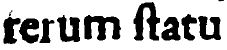
Jakob Bernoulli, Ars Conjectandi, 224: in simili rerum statu (in a similar state of affairs [of things]) clearly denoting a systems view. The complete quotation is very clear: Quandoquidem praesumi debet, tot casibus unumquodque posthac contingere et non contingere posse, quoties id antehac in simili rerum statu contigisse et non contigisse fuerit deprehensum. (For it should be presumed that each event will occur or not occur in the future as many times as it has been observed, in a similar state of affairs, to have occurred or not occurred in the past.) From Adams, W. (1974) The Life and Times of the CLT, 10.


But there is one other interesting version:
  • caeteris manentibus


The Logic of the Categorical: The Medieval Theory of Descent and Ascent

Check paper Spades: In the Stanford Encyclopedia of Philosophy: William of Ockham

Ockham using a metaphor of a structure explains deduction and induction:

  • It is possible to “descend to singulars” as follows: “Every dog is a mammal; therefore, Fido is a mammal, and Rover is a mammal, and Bowser is a mammal …,” and so on for all dogs.
  • It is not possible to “ascend from any one singular” as follows: “Fido is a mammal; therefore, every dog is a mammal.”
It's interesting to note in passing the argument concerning 'universals' of Ireneo Funes, in Borges ' Funes the Memorious:
He was, let us not forget, almost incapable of ideas of a general, Platonic sort. Not only was it difficult for him to comprehend that the generic symbol dog embraces so many unlike individuals of diverse size and form; it bothered him that the dog at three fourteen (seen from the side) should have the same name as the dog at three fifteen (seen from the front).
However, Borges, observes:
[Funes] was not very capable of thought. To think is to forget differences, to generalize, to abstract. In the crammed world of Funes there were nothing but details, almost immediate details.
Milton's Logic also deals with this idea when describing "distribution" and "induction".

On the Reference Class Problem

Extremely important conceptualization of the key problem of many fields of inquiry... expand

Reichenbach defines it:
“If we are asked to find the probability holding for an individual future event, we must first incorporate the case in a suitable reference class. An individual thing or event may be incorporated in many reference classes, from which different probabilities will result. This ambiguity has been called the problem of the reference class”. In Reichenbach, H. (1949): The Theory of Probability, California U.P., 374.
Moreover, Reichenbach has more to say on how the reference class is arrived at:
If probability belongs to a class, its numerical value is determined because for a class of events a frequency of occurrence may be determined. A single event, however, belongs to many classes; which of the classes are we to choose as determining the weight? Suppose a man forty years old has tuberculosis; we want to know the probability of his death. Shall we consider for that purpose the frequency of death within the class of men forty years old, or within the class of tubercular people? And there are, of course, many other classes to which the man belongs. The answer is, I think, obvious. We take the narrowest class for which we have reliable statistics.
Of course, reliable statistics implies a detailed knowledge of causes, etc. Now, the classical definition by Venn is:
every single thing or event has an indefinite number of properties or attributes observable in it, and might therefore be considered as belonging to an indefinite number of different classes of things", leading to problems with how to assign probabilities to a single case. He used as an example the probability that John Smith, a consumptive Englishman aged fifty, will live to sixty-one
Durkheim (The Rules of Sociological Method, Free Press, 1982, H. Walls trans., p. 110), in proposing methods of sociological research, analyzes the implicit difficulties of finding clear-cut definitions of species and genera and provides useful insights into them:
...It is untrue that science can formulate laws only after having reviewed all the facts they express, or arrive at categories only after having described, in their totality, the individuals that they include. The true experimental method tends rather to substitute for common facts, which only give rise to proofs when they are very numerous and which consequently allow conclusions which are always suspect. decisive or crucial facts. as Bacon said which by themselves and regardless of their number, have scientific value and interest. It is particularly necessary to proceed in this fashion when one sets about constituting genera and species. This is because to attempt an inventory of all the characteristics peculiar to an individual, is an insoluble problem. Every individual is an infinity, and infinity cannot be exhausted. Should we therefore stick to the most essential properties? If so, on what principle will we then make a selection? For this a criterion is required which is beyond the capacity of the individual and which consequently even the best monographs could not provide. Without carrying matters to this extreme of rigour, we can envisage that, the more numerous the characteristics to serve as the basis for a classification, the more difficult it will also be, in view of the different ways in which these characteristics combine together in particular cases, to present similarities and distinctions which are clear-cut enough to allow the constitution of definite groups and sub-groups.  
Even were a classification possible using this method, it would present a major drawback in that it would not have the usefulness it should possess. Its main purpose should be to expedite the scientific task by substituting for an indefinite multiplicity of individuals a limited number of types. But this advantage is lost if these types can only be constituted after all individuals have been investigated and analysed in their entirety. It can hardly facilitate the research if it does no more than summarise research already carried out. It will only be really useful if it allows us to classify characteristics other than those which serve as a basis for it, and if it furnishes us with a framework for future facts. Its role is to supply us with reference points to which we can add observations other than those which these reference points have already provided. But for this the classification must be made, not on the basis of a complete inventory of all individual characteristics, but according to a small number of them, carefully selected. Under these conditions it will not only serve to reduce to some order knowledge already discovered, but also to produce more. It will spare the observer from following up many lines of enquiry because it will serve as a guide. Thus once a classification has been established according to this principle, in order to know whether a fact is general throughout a particular species, it will be unnecessary to have observed all societies belonging to this species - the study of a few will suffice. In many cases even one observation well conducted will be enough, just as often an experiment efficiently carried out is sufficient to establish a law.
The value of Durkheim's observation lies more on the enunciation of the difficulties of the reference class problem, rather than in the solution that he proposed, which seems to open many other difficulties.
In any case, Here's an interesting example of a taxonomy that somehow falls within a reference class problem:

Variation in size of different types of soil. From Kay (1990)  

Another interesting classification:

Scale definitions and different processes with characteristic and horizontal scales. (Isidoro Orlanski, BAMS, 05/1975, 56, 5, 528)
See also the definition of Collingwood of universal and reference classes in Speculum Mentis, 162-163.

Cicero in the Orator (4.16) says:
Nor, indeed, without having studied in the schools of philosophers, can we discern the genus (classes) and species of everything; nor explain them by proper definitions; nor distribute them into their proper divisions; nor decide what is true and what is false; nor discern consequences, perceive inconsistencies, and distinguish what is doubtful. 
See also, Keynes discussion of the concept in A Treatise on Probability (1948 Macmillan) p. 103ff.

See also
  • J. Alberto Coffa (1974), Hempel’s Ambiguity. Synthese 28, 141-163
  • See Stern, R. (2012) Individual Risk, The Journal of Clinical Hypertension, Volume 14, Issue 4, 261 - 264
  • Kay, B. (1990) Rates of Change of Soil Structure Under Different Cropping Systems. Advances in Soil Science, 12, 1-52

What is abstraction?


Jorge Luis Borges introduces his short story on Ireneo Funes, the Memorious saying that:
To think is to forget differences, to generalize and to abstract.
Borges not only ventured into philosophy (Egginton & Johnson, 2009), but also foretold modern research (Kreiman, 2011; Quian Quiroga, 2012). The above gives a nice summary of what abstraction, and generalization is. I'm interested in defining it, and for that I'm actively collecting all references that come across me. Generalization and abstraction, although related, aren't identical. Both nevertheless are related to the induction problem in that they imply leaps from the particular to the general.
George Berkeley offers a very straightforward explanation of (PHK 7,8)

Abstraction is the singling of object qualities and modes:
...the qualities or modes of things do never really exist ... apart by itself, and separated from all others, but are mixed, as it were, and blended together, several in the same object. But the mind [is] able to consider each quality singly or abstracted from those other qualities with which it is united, [and] does by that means frame to itself abstract ideas. Again, the mind having observed that in the particular extensions perceived by sense there is something common and alike in all, and some other things peculiar, as this or that figure or magnitude, which distinguish them one from another; it considers apart or singles out by itself that which is common... So likewise the mind, by leaving out of the particular ... perceived by sense that which distinguishes them one from another, and retaining that only which is common to all.
 Locke adds:
Since all things that exist are only particulars, how come we by general terms?... Words become general by being made the signs of general ideas. (EUH, IV, iii,6)
Hume elaborates on the relation of ideas:
The very nature and essence of relation is to connect our ideas with each other, and upon the appearance of one, to facilitate the transition to its correlative. The passage betwixt related ideas is, therefore, so smooth and easy... (Treatise 1.4.2.34)
One of the ones I like most  is the one provided by Prof. Paul Humphreys (UVa):
The term ‘abstraction’ has been used in a variety of senses...covered by a process that we can call property elimination, which takes us from whatever total collection of properties (‘Properties’ here includes relations) is possessed by an entity to a proper subcollection of those properties, those properties being left unchanged (Except, of course, for the relation of the remaining properties to the now absent ones). Abstraction thus requires properties to be modular in the sense that the remaining properties are invariant when any given property is eliminated. Extending Ourselves, 141

References

Kreiman, G. (2011) Literary inspiration. Nature, (475), 453.
Quian Quiroga, (2012) Borges and Memory: Encounters with the Human Brain. The MIT Press.
Egginton, W. and Johnson, D. (2009) Thinking with Borges. The Davies Group Publishers.
Locke, Essay on Human Understanding
Berkeley, PHK