Showing posts with label Assumptions. Show all posts

Adam Smith and Behavioral Economics

Assumptions of Adam Smith, later proved by psychologists and economists. 

"The overweening conceit which the greater part of men have of their own abilities is an ancient evil remarked by the philosophers and moralists of all ages. Their absurd presumption in their own good fortune has been less taken notice of...The chance of gain is by every man more or less overvalued, and the chance of loss is by most men undervalued, and by scarce any man, who is in tolerable health and spirits, valued more than it is worth." Wealth of Nations I.10.29–31 (1776)

"Pain, I have already had occasion to observe, is, in almost all cases, a more pungent sensation than the opposite and correspondent pleasure." The Theory of Moral Sentiments, III, ii.

"The pleasure which we are to enjoy ten years hence, interests us so little in comparison with that which we may enjoy to-day, the passion which the first excites, is naturally so weak in comparison with that violent emotion which the second is apt to give occasion to, that the one could never be any balance to the other, unless it was supported by the sense of propriety.” “The spectator,” in contrast, “does not feel the solicitations of our present appetites. To him the pleasure which we are to enjoy a week hence, or a year hence, is just as interesting as that which we are to enjoy this moment” (Theory of Moral Sentiments IV, ii).

References

Ashraf, Camerer, Loewenstein (2005) Adam Smith, Behavioral Economist. Journal of Economic Perspectives—Volume 19, Number 3—Summer 2005—Pages 131–145 https://www.cmu.edu/dietrich/sds/docs/loewenstein/AdamSmith.pdf


Wir müssen wissen – wir werden wissen

 Emil du Bois-Reymond about "we don't know, we will not know"

Gegenüber den Räthseln der Körperwelt ist der Naturforscher längst gewöhnt, mit männlicher Entsagung sein 'Ignoramus' auszusprechen. Im Rückblick auf die durchlaufene siegreiche Bahn trägt ihn dabei das stille Bewusstsein, dass, wo er jetzt nicht weiss, er wenigstens unter Umständen wissen könnte, und der- einst vielleicht wissen wird. Gegenüber dem Räthsel aber, was Materie und Kraft seien, und wie sie zu denken vermögen, muss er ein für allemal zu dem viel schwerer abzugebenden Wahrspruch sich ent- schliessen: 

Ignorabimus!

Über die grenzen des Naturerkennens : die sieben Welträthsel, Leipzig, 1852, p.45ff


But David Hilbert, opposed this view:

We must not believe those, who today, with philosophical bearing and deliberative tone, prophesy the fall of culture and accept the ignorabimus. For us there is no ignorabimus, and in my opinion none whatever in natural science. In opposition to the foolish ignorabimus our slogan shall be Wir müssen wissen – wir werden wissen ("We must know — we will know.")


Hillel said: 

Say not of a thing which cannot be understood that in the end it will be understood 

(The Father According to Rabbi Nathan p. 117)


Which the commentators explained as:

Rambam: "Do not have your words require a distant explanation and extra examination and [only] then will the listener understand them."

Bartenura: "Do not say something that cannot be heard, for in the end it will be heard": That is to say, do not let your words be unclear, such that it is impossible to understand them immediately and at first perusal; and [do not] rely on that if the listener wants to look into them, in the end, he will understand them. As this will bring people to err from your words, lest they err and come to heresy because of you. Another explanation: Do not reveal your secret, even [saying it aloud] only to yourself, as in the end it will be heard, "since the birds of the sky make the voice travel." And the [correct] textual variant according to this explanation is, "for in the end it will be heard." But Rashi had the variant, "Do not say, 'something that can be heard, in the end it will be heard.'" And [according to this,] it is speaking about the words of Torah: Do not say about a Torah teaching that you can hear now, that you will hear it in the end (later), but rather extend your ears and hear it immediately.

English Explanation of Mishnah Bartenura: a person should make his words clear from the outset, and not speak or write in an unclear manner. Although in the end the matter might be cleared up, in the meanwhile the listener might make mistakes.

Ikar Tosafot Yom Tov: "Rambam does not explain it [this way], but rather that simple words should not be very distant and confound speech. As [Rambam] says [that] your words should not require a far-fetched explanation."

References:

https://www.sefaria.org/Pirkei_Avot.2.4?lang=bi&with=Commentary&lang2=en

https://wellcomelibrary.org/item/b28103555#?c=0&m=0&s=0&cv=50&z=-1.0837%2C0%2C3.1675%2C1.6027


Personal characteristics of effective political actors


Reference

Robert W. Allen, Dan L. Madison, Lyman W. Porter, Patricia A. Renwick, Bronston T. Mayes (1979) Organizational Politics: Tactics and Characteristics of Its Actors. California Management Review, Volume: 22 issue: 1, page(s): 77-83. https://doi.org/10.2307/41164852 


On the authority of Science - Cohen

On the authority of Science:

"To be sure, the vast majority of people who are untrained can accept the results of science only on authority. But there is obviously an important difference between an establishment that is open and invites every one to come, study its methods, and suggest improvement, and one that regards the questioning of credentials as due to wickedness of heart..." 

Morris R. Cohen, Reason and Nature.


hitherto unconquered difficulties

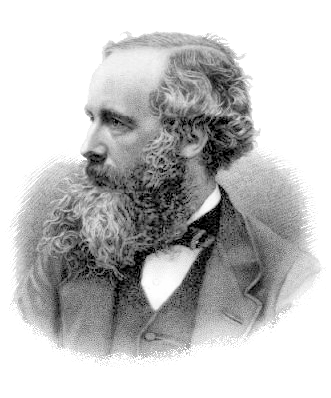
James Clerk Maxwell - Wikipedia 

"...hitherto unconquered difficulties..."

Reference:

http://web.lemoyne.edu/~giunta/maxwell1.html

Variations of the Observer Error

observer error: An error of observation or measurement due to failure of the observer to identify, measure accurately, or interpret some aspect of the phenomena that are being observed. This can have many reasons and causes, including careless or hasty measurements, faulty instruments, erroneous or illogical interpretation, and/or any of many possible sources of bias. It erodes the credibility of science when it occurs. Oxford Reference

Lucas critique argues that it is naive to try to predict the effects of a change in economic policy entirely on the basis of relationships observed in historical data, especially highly aggregated historical data. (Wiki).

Lucas critique (version 2): "Any statistical relationship will break down when used for policy purposes". Danielsson's corollary: A financial risk model breaks down when used for regulatory purposes.


Campbell's law: "The more any quantitative social indicator is used for social decision-making, the more subject it will be to corruption pressures and the more apt it will be to distort and corrupt the social processes it is intended to monitor."

Goodhart's Law: "Any observed statistical regularity will tend to collapse once pressure is placed upon it for control purposes." (Wiki)


Operational concepts of Evidence

The philosopher P. Achinstein (Speculation, p. 16ff) developed a helpful concept of evidence. Four concepts are presented: potential, veridical, ES, and subjective.
(A) Some fact e is potential evidence that a hypothesis h holds, iff the probability of there being an explanatory connection between e and h, p(E(e,h)|e) > 1/2. (with e := true, e ⊬ h). 
* Notes to potential evidence
  • the inequality probably means that p(E) ≠ 1/2, i.e. not indifferent or know-nothing situation,  because it'd be nice to have a 0% or 100%.
  • The "explanatory connection" between e and h seems to be given by an additional list of assumptions (p. 194-195) which include correlations grounded in empirical data, etc.
  • The "explanatory connection" E(e,h)|e explained in terms of a threshold probability of 50%, is maybe related to a statistical type of explanation (i.e. a la Wesley Salmon)?


System of Knowledge and Explanation

"Organized knowledge of a subject and the interrelationship of its various parts, is superior to disorganized knowledge – just as a beautiful garden arranged with beds of flowers, paths and rows of plants is superior to a chaotically overgrown forest...A person should always endeavour to grasp general principles...When a person understands one principle he automatically understands a great number of details."
Introduction to R. Moshe Luzzatto (Ramchal) Derech HaShem.

Wesley Salmon (Four Decades of Scientific Explanation, 1990) argues a description of what "explanation" is:
Wesley C. Salmon[explanations] show how empirical phenomena fits into a causal nexus (paraphrase p.121)... the explanation of events consists in fitting them into the patterns that exist in the objective world. When we seek an explanation, it is because we have not discerned some feature of the regular patterns; we explain by providing information about these patterns that reveals how the explanandum-events fit in.... explanation reveal the mechanisms, causal or other, that produce the [events] we are trying to explain. (p 121).  
The challenge is when we're aware that we don't know adequately or completely the regular patterns, or mechanisms that produce the events, and we know that we never will know them completely. 


Johann Kaspar Sulzer: De conceptibus

Cap. I. De conceptibus et quomodo in species et genera ordinentur.
§l Quicquid in rerum natura sensibus nostris observatur, singulare est.

§2 Omne singulare ab alio singulari differt eo ipso, quod est aliud, et individuum vocatur.

§3 Omnia itaque in rerum natura sunt diversa, et licet sint innumerabilis, tamen semper unum non est alterum: unum individuum non est alterum individuum: Jacobus non est Johannes.

§4 Quamquam vero diversa sunt, in multis tamen convenire deprehendimus. In quibus conveniunt vel similia sunt, eo respectu ad eandem referuntur classem: in quibus non conveniunt, ad diversam classem referuntur.

§5 Quae ad eandem classem pertinent, idem nomen habent: diversa classis diversum nomen obtinet, et nomen unius classis alteri non convenit. v.g. Jacobus et Henricus, quia similes sunt, pertinent ad unam eandemque classem, cui virorum nomen est. Hinc uterque est vir. Anna vero et Maria, quia multum differunt a Jacobo et Henrico, diversam classem constituunt, quae nomine feminarum gaudet. Est ergo et Anna et Maria femina, sed vir non est femina nec femina vir.

§6 Ex collatione igitur rerum omnium plurimae classes rerum oriuntur, et semper diversae, quia classis una non est altera, §2, 3.

§7 Classes, quae ex similitudine individuorum promanant, erunt classes primi ordinis, et dicuntur species, vgr. mares, feminae.

§8 Classes primi ordinis, licet diversae, similitudinem quandam habent, quae similitudo exhibet classes secundi ordinis, seu classes specierum, et tales classes vocantur genera. Sic mares et feminae ex Jacobo, Henrico, Anna, Maria orti homines nominantur, hinc mares et feminae erunt species, homines vero genus.

§9 Classes, quae ex similitudine classium secundi ordinis oriuntur, tertii ordinis classes producunt, et generum superiorum nomine veniunt. Tale genus superius est, si homines et bruta conferuntur, et ex eo, quod utrinque vivunt et sentiunt, in unam classem ordinantur, quae classis animalium nomen habet, animal ergo erit genus superius.

§10 Ulterius sic procedendo classes quarti, quinti, cet. ordinis exhibentur, et sic superiora semper genera nobis sistuntur, donec tandem ad unam ultimam classem perveniamus, quae supremum genus dicitur, quod ens est [ ... ].
§13 Quod itaque genus nomen habet, et quidquid de genere dicitur, id nomen quoque habent omnia, quae sub hoc genere comprehenduntur ad individua usque, et de iis quoque absolute dicitur. Exemplum sit animal, quia homines, bruta, mares, feminae, cet. comprehendit, dicetur homo est animal, brutum, vir, femina, Jacobus, Maria, cet., est animal. Et si dicitur: animal sentit, etiam homo, brutum, vir, femina, Jacobus, Maria, sentit.

References:
See: Angelelli, I. (1974) LA JERARQUIA DE CLASES DE JOHANN CASPAR SULZER (1755). Cuadernos de Filosofia. Universidad de Buenos Aires. XIV, 21 , 1974

Concepts of Evidence


Image result for carnapFrom Carnap, Logical Foundations of Probability, p. 163. See Also Rabinovitch, p. 109
  1. Classificatory
    • e renders h probable
  2. Comparative
    • e1 renders h1 more probable than e2 renders h2
    • (e1 & e2) render h more probable than e1 alone does.
    • e1 renders h1 more probable than it does h2
  3. Quantitative
    • the probability of h on e is r

Uncertainty, Veracity, Logicality

According to Ortega y Gasset, veracity and logicality (logicidad) are two dimensions of the concept (The Idea of Principle in Leibniz)

Keep reading!

Baldus de Ubaldis on Components of Argument (praesumptio, fictio, indicium, coniectura, adminiculum)


¶Deinde debemus diffinire quædam alia: quia antequam perveniatur ad cognitionem rei alicuius: homo transit per multos gradus, & per multa media,& paulatim per partes devenit in notitiam veri, & ideo diffinio hæc,quæ sequuntur.

Et primò quid est suspicio? Respondo quòd suspicio est aliqualis applicatio animi ad aliquid cum vehementi titubatione. Vel sic, Suspicio est motus quidam mentis ad aliquid cum vehementi titubatione: non tamen hgc diffinitio procedit loquendo de materia suspecti tutoris vel alterius administratoris, quia illa suspicio non est simplex suspicio, sed est suspicio permixta cum coniecturis, præsumptionibus, & aliis verisimilibus, ex quibus quis ab officio removet.

¶Quæro, quid est praesumptio? dico quòd praesumptio hominis est quidam conceptus causatus in mente ab aliqua probabili coniectura
  • I ask what is a presumption? I say that it is a concept formed in man's mind by a particular plausible conjecture.
¶Præsumptio vero iuris est duplex, una est presumptio simplex, que sic diffinitur: præsumptiò iuris simplex est similitudo quedam sufficiens ad rem dubiam, de qua creduntur credenda. ¶ Presumptio verò iuris & de iure sic diffinit, Præsumptio iuris, & de iure est status à iure, promulgatus ex indubia coniectura.

¶Fictio verò sic diffinitur, Fictio est falsitas pro veritate accepta, ex specialissima & iustissima causà in iure èxpressa.
  • Fiction is a falsity accepted as true for a very special and just cause expressed in Law.
¶Indicium vero est duplex, semiplenum seu dubitatum, & plenum seu indubitatum. indicium semiplenum est praesumptio fortiter movens animum ad aliquid credendum vel discredendum. Indicium vero plenum est demonstratio rei per signa sufficientia, per quæ animus in aliquo tanquàm in existente quiescit, & plus investigare non curat.

Argumentum autem sic diffinitur, Argumentum est propositio ex aliquibus existentibus resultans, ad propositum ostendendum seu concludendum: unde quando plura indicia vel plures propositiones, vel plures præsumptiones, vel plures testes ad unam conclusionem ad aliquid probandum copulantur: istud sic copulare dicitur argumentatio, sive argumentum, quod est collatio plurium ad unam conclusionem.

¶Adminiculum est duplex, scilicet vehemens, & non vehemens. Adminiculum vehemens sic diffinitur, Adminiculum vehemens et suppletio defectus probationis, per sé folum non operans, fed cum alia probatione cooperans, probatur hoc extra. Adminiculum non vehemens,est aliqualis confirmatio rei probabilis, vel est aliqualis confirmatio veri tendens ad aliquid suspendendum de defectu probationis: &talia adminicula per se sola etiam plura non sufficiunt.

¶Coniecturas vero sic diffinitur, Coniectura est acceptio seu reputatio veri, ex aliquo alio sic verisimiliter ordinato: sicut per circulum coniecturamur tabernam, per habitum meretricem.

His vero omnibus opposita sunt nescientiam & error. Nescientia autem sic diffinitur, Nescientia seu ignorantia est intellectus non determinans se ad verum,vel falsum.

¶Error autem est privatio intellecto, determinans se ad falfum: vel est priuatio causata ad intellectum per falsam imaginationem. Ideo autem dixi, privatio: quia omne de quo non est verum, est quædam privatio, unde dictum est de qualibet probatione, quaedam sunt manifesta,quædam sunt,quæ sunt notoria, de quibus oportet videre verisimile sic diffinitur.

¶Verisimile est id, quod vero videtur simile, non verisimile, sic diffinitur, Non verisimile est quod à vero dissimile videtur.

Bibliography
Baldus ad liber ix Codicis (p. 212-213)

Methodolatry, Mathematization, Apotheosis of the Instrument

A few sober and cautionary observations on the misuses or uncritical use of methods. The term methodolatry was coined, apparently, by psychologist Gordon Allport:
There is methodolatry, or the love of gadgetry: the tendency to take more satisfaction in methods than in the results. Also there is the repose, the respite from hard thought and hairy decisions, that a smooth algorithm can bring. In these ways one may be lured into problems that lend themselves to favorable techniques, though they not be the problems most central to one’s concerns. The rise of the computer aggravates this danger. (Quine, (1981) Theories and Things, 153 f.)
Also,
[...] as methods and techniques get more complicated, the role of theory in research is being dangerously ignored in favor of purely empirical work that proceeds without so much as a hypothesis. Like Pirandello’s characters in search of an author, many of today’s researchers seem to have an assortment of techniques in search of a substantive problem. (Einhorn, (1972), Alchemy in the Behavioral Sciences. The Public Opinion Quarterly, 36 (3), 367–378)
Quine goes on to indicate that:
"Induction, primitively, was a mere matter of expecting that events that are similar by our lights will have sequels that are similar to one another. The larger the class of mutually similar antecedent events may be, all of which have had mutually similar sequels, the stronger is the presumption of a similar sequel the next time around. But the presumption is increased overwhelmingly  if variations among the antecedent events can be correlated with variations in the sequels. For this purpose  measurement is brought to bear. Measurement is devised for some varying feature of the otherwise similar antecedent ... and also for some varying feature of the otherwise similar sequels, and a constant ratio or some other simple correlation is established between the two variations. Once this is achieved, a causal connection can no longer be doubted. Because of the power of these methods, and ultimately the predictive power of concomitant sciences clamor to be quantitative; they clamor for something to measure. This is both good and bad. It is very good indeed if the measurable quantity can be found to play a significant role in the subject matter of the science in question. It is bad if in the quest for something to measure the scientist turns his back on the original concerns of his science and is borne away, however smoothly, on a tangent of trivialities. Ills of mathematization, as well as successes, can be laid to the quest of quantitativity." Quine, 152-153
Quite on a different plane, there's also the mathematization of history. In this last regard I find interesting the observations of the philosopher J. A. Leighton in 1938:
History is a unique field of data for the philosopher. The  processes of history are the processes of history. They cannot be  reduced to any mathematized or logicized metaphysic, based on physical science. The principles for historical interpretation must be found in the interest-seeking, value-striving, unique nature of man.... As such he lives in and by a system of socialized interests and values. The specificity of human history forbids its being stretched out on any Procrustean bed of merely physical or physico-biological cosmological categories...(order to attempt to explain spiritual powers in terms of a desiccated mathematized technology. It is a case of apotheosis of the instrument). Granting that physical determination plays a large role in the shaping of cultures, and man's animal inheritance a larger role, it remains true that such categories as "struggle for existence" and even "adaptation to environment" do not take us far in the interpretation of cultures, and become misleading and distorting concepts when carried out in a doctrinaire fashion.
Reference:
J. A. Leighton (1938) History as the Struggle for Social Values. Proceedings and Addresses of the American Philosophical Association, Vol. 12, pp. 118-154


On the Reference Class Problem

Extremely important conceptualization of the key problem of many fields of inquiry... expand

Reichenbach defines it:
“If we are asked to find the probability holding for an individual future event, we must first incorporate the case in a suitable reference class. An individual thing or event may be incorporated in many reference classes, from which different probabilities will result. This ambiguity has been called the problem of the reference class”. In Reichenbach, H. (1949): The Theory of Probability, California U.P., 374.
Moreover, Reichenbach has more to say on how the reference class is arrived at:
If probability belongs to a class, its numerical value is determined because for a class of events a frequency of occurrence may be determined. A single event, however, belongs to many classes; which of the classes are we to choose as determining the weight? Suppose a man forty years old has tuberculosis; we want to know the probability of his death. Shall we consider for that purpose the frequency of death within the class of men forty years old, or within the class of tubercular people? And there are, of course, many other classes to which the man belongs. The answer is, I think, obvious. We take the narrowest class for which we have reliable statistics.
Of course, reliable statistics implies a detailed knowledge of causes, etc. Now, the classical definition by Venn is:
every single thing or event has an indefinite number of properties or attributes observable in it, and might therefore be considered as belonging to an indefinite number of different classes of things", leading to problems with how to assign probabilities to a single case. He used as an example the probability that John Smith, a consumptive Englishman aged fifty, will live to sixty-one
Durkheim (The Rules of Sociological Method, Free Press, 1982, H. Walls trans., p. 110), in proposing methods of sociological research, analyzes the implicit difficulties of finding clear-cut definitions of species and genera and provides useful insights into them:
...It is untrue that science can formulate laws only after having reviewed all the facts they express, or arrive at categories only after having described, in their totality, the individuals that they include. The true experimental method tends rather to substitute for common facts, which only give rise to proofs when they are very numerous and which consequently allow conclusions which are always suspect. decisive or crucial facts. as Bacon said which by themselves and regardless of their number, have scientific value and interest. It is particularly necessary to proceed in this fashion when one sets about constituting genera and species. This is because to attempt an inventory of all the characteristics peculiar to an individual, is an insoluble problem. Every individual is an infinity, and infinity cannot be exhausted. Should we therefore stick to the most essential properties? If so, on what principle will we then make a selection? For this a criterion is required which is beyond the capacity of the individual and which consequently even the best monographs could not provide. Without carrying matters to this extreme of rigour, we can envisage that, the more numerous the characteristics to serve as the basis for a classification, the more difficult it will also be, in view of the different ways in which these characteristics combine together in particular cases, to present similarities and distinctions which are clear-cut enough to allow the constitution of definite groups and sub-groups.  
Even were a classification possible using this method, it would present a major drawback in that it would not have the usefulness it should possess. Its main purpose should be to expedite the scientific task by substituting for an indefinite multiplicity of individuals a limited number of types. But this advantage is lost if these types can only be constituted after all individuals have been investigated and analysed in their entirety. It can hardly facilitate the research if it does no more than summarise research already carried out. It will only be really useful if it allows us to classify characteristics other than those which serve as a basis for it, and if it furnishes us with a framework for future facts. Its role is to supply us with reference points to which we can add observations other than those which these reference points have already provided. But for this the classification must be made, not on the basis of a complete inventory of all individual characteristics, but according to a small number of them, carefully selected. Under these conditions it will not only serve to reduce to some order knowledge already discovered, but also to produce more. It will spare the observer from following up many lines of enquiry because it will serve as a guide. Thus once a classification has been established according to this principle, in order to know whether a fact is general throughout a particular species, it will be unnecessary to have observed all societies belonging to this species - the study of a few will suffice. In many cases even one observation well conducted will be enough, just as often an experiment efficiently carried out is sufficient to establish a law.
The value of Durkheim's observation lies more on the enunciation of the difficulties of the reference class problem, rather than in the solution that he proposed, which seems to open many other difficulties.
In any case, Here's an interesting example of a taxonomy that somehow falls within a reference class problem:

Variation in size of different types of soil. From Kay (1990)  

Another interesting classification:

Scale definitions and different processes with characteristic and horizontal scales. (Isidoro Orlanski, BAMS, 05/1975, 56, 5, 528)
See also the definition of Collingwood of universal and reference classes in Speculum Mentis, 162-163.

Cicero in the Orator (4.16) says:
Nor, indeed, without having studied in the schools of philosophers, can we discern the genus (classes) and species of everything; nor explain them by proper definitions; nor distribute them into their proper divisions; nor decide what is true and what is false; nor discern consequences, perceive inconsistencies, and distinguish what is doubtful. 
See also, Keynes discussion of the concept in A Treatise on Probability (1948 Macmillan) p. 103ff.

See also
  • J. Alberto Coffa (1974), Hempel’s Ambiguity. Synthese 28, 141-163
  • See Stern, R. (2012) Individual Risk, The Journal of Clinical Hypertension, Volume 14, Issue 4, 261 - 264
  • Kay, B. (1990) Rates of Change of Soil Structure Under Different Cropping Systems. Advances in Soil Science, 12, 1-52