"... even a perfect and complete description of the microscopic properties of a material is not enough to predict its macroscopic behaviour"
https://www.nature.com/articles/nature16059
"... even a perfect and complete description of the microscopic properties of a material is not enough to predict its macroscopic behaviour"
https://www.nature.com/articles/nature16059
El pasado es arcilla que el presente
labra a su antojo. Interminablemente.
Borges
Todos los ayeres, un sueño
Los conjurados (1985)

"To be sure, the vast majority of people who are untrained can accept the results of science only on authority. But there is obviously an important difference between an establishment that is open and invites every one to come, study its methods, and suggest improvement, and one that regards the questioning of credentials as due to wickedness of heart..."
Morris R. Cohen, Reason and Nature.
The natural progress of things is for liberty to yield, and government to gain ground.


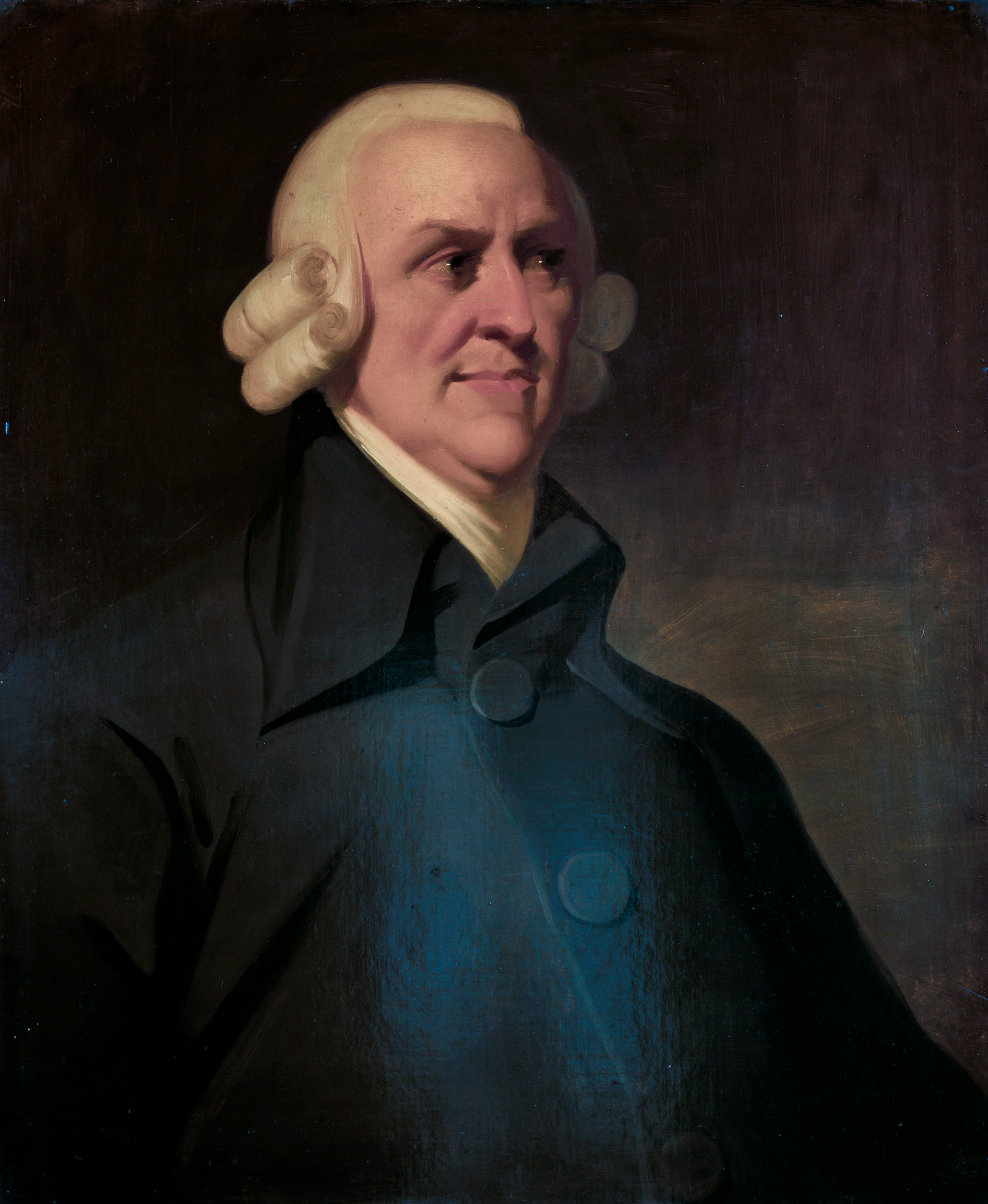
The man whose public spirit is prompted altogether by humanity and benevolence, will respect the established powers and privileges even of individuals, and still more those of the great orders and societies, into which the state is divided. Though he should consider some of them as in some measure abusive, he will content himself with moderating, what he often cannot annihilate without great violence. When he cannot conquer the rooted prejudices of the people by reason and persuasion, he will not attempt to subdue them by force... He will accommodate, as well as he can, his public arrangements to the confirmed habits and prejudices of the people; and will remedy as well as he can, the inconveniencies which may flow from the want of those regulations which the people are averse to submit to. When he cannot establish the right, he will not disdain to ameliorate the wrong; but like Solon, when he cannot establish the best system of laws, he will endeavour to establish the best that the people can bear.
The man of system, on the contrary, is apt to be very wise in his own conceit; and is often so enamoured with the supposed beauty of his own ideal plan of government, that he cannot suffer the smallest deviation from any part of it. He goes on to establish it completely and in all its parts, without any regard either to the great interests, or to the strong prejudices which may oppose it. He seems to imagine that he can arrange the different members of a great society with as much ease as the hand arranges the different pieces upon a chess-board. He does not consider that the pieces upon the chess-board have no other principle of motion besides that which the hand impresses upon them; but that, in the great chess-board of human society, every single piece has a principle of motion of its own, altogether different from that which the legislature might chuse to impress upon it. If those two principles coincide and act in the same direction, the game of human society will go on easily and harmoniously, and is very likely to be happy and successful. If they are opposite or different, the game will go on miserably, and the society must be at all times in the highest degree of disorder.Some general, and even systematical, idea of the perfection of policy and law, may no doubt be necessary for directing the views of the statesman. But to insist upon establishing, and upon establishing all at once, and in spite of all opposition, every thing which that idea may seem to require, must often be the highest degree of arrogance. It is to erect his own judgment into the supreme standard of right and wrong. It is to fancy himself the only wise and worthy man in the commonwealth, and that his fellow-citizens should accommodate themselves to him and not he to them. It is upon this account, that of all political speculators, sovereign princes are by far the most dangerous. This arrogance is perfectly familiar to them. They entertain no doubt of the immense superiority of their own judgment.

With regards the moral fabric of the citizenry, James Madison, 4th president of the republic, stated his view:
I go on this great republican principle, that the people will have virtue and intelligence to select men of virtue and wisdom. Is there no virtue among us? If there be not, we are in a wretched situation. No theoretical checks—no form of government can render us secure. To suppose that any form of government will secure liberty or happiness without any virtue in the people, is a chimerical idea. If there be sufficient virtue and intelligence in the community, it will be exercised in the selection of these men. So that we do not depend on their virtue, or put confidence in our rulers, but in the people who are to choose them.
Judicial Powers of the National Government, [20 June] 1788
References
https://founders.archives.gov/documents/Madison/01-11-02-0101
Thesis 1: Men are equal in intellectual abilities (British Moral Philosophers)
Adam Smith (Wealth of Nations, book 1, Chap. 2)
The difference of natural talents in different men is, in reality, much less than we are aware of; and the very different genius which appears to distinguish men of different professions,
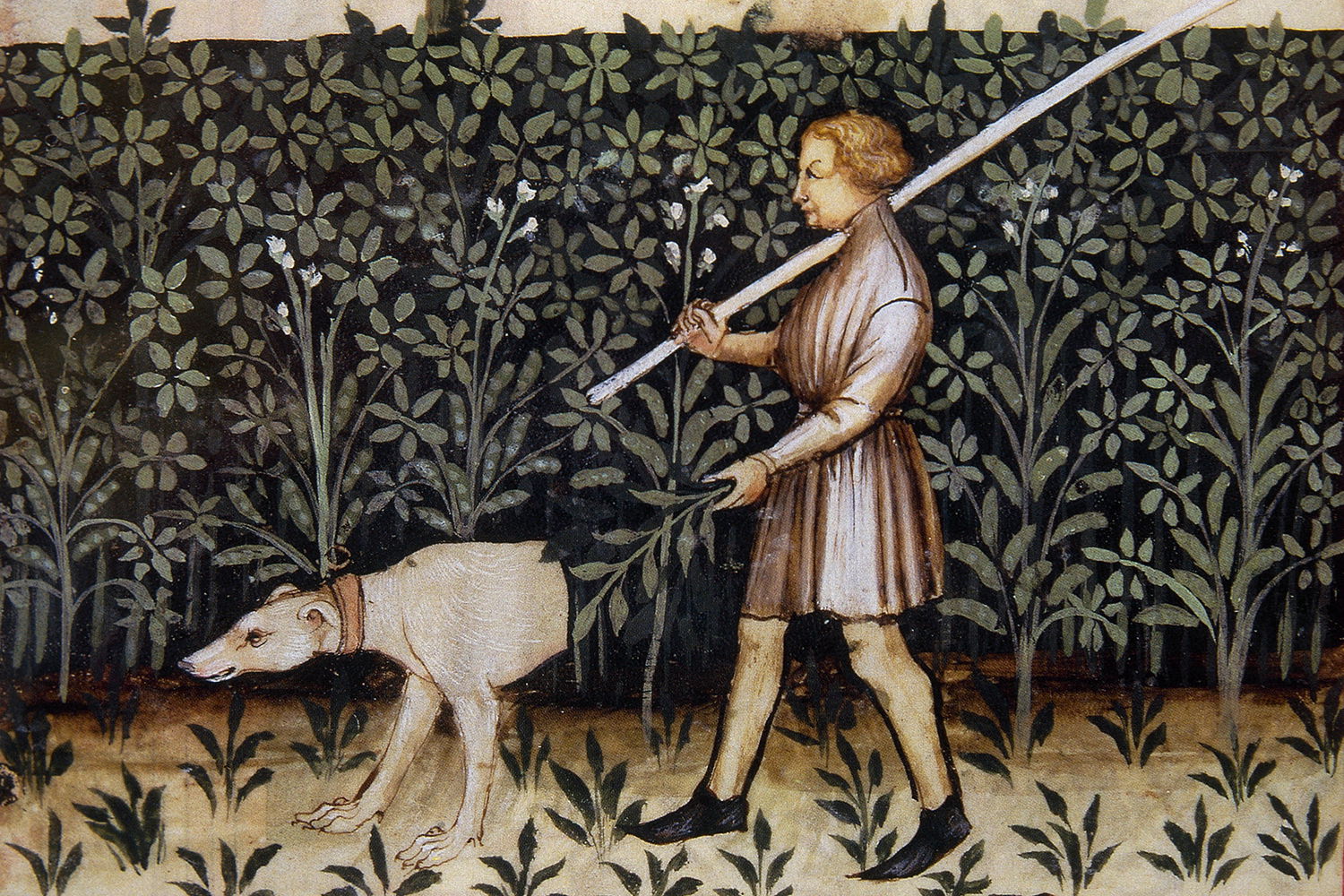
when grown up to maturity, is not upon many occasions so much the cause as the effect of the division of labour. The difference between the most dissimilar characters, between a philosopher and a common street porter, for example, seems to arise not so much from nature as from habit, custom, and education. When they came into the world, and for the first six or eight years of their existence, they were, perhaps, very much alike, and neither their parents nor playfellows could perceive any remarkable difference. About that age, or soon after, they come to be employed in very different occupations. The difference of talents comes then to be taken notice of, and widens by degrees, till at last the vanity of the philosopher is willing to acknowledge scarce any resemblance... By nature a philosopher is not in genius and disposition half so different from a street porter, as a mastiff is from a greyhound, or a greyhound from a spaniel, or this last from a shepherd's dog.
David Hume (Of the Original Contract 1752)
...how nearly equal all men are in their bodily force, and even in their mental powers and faculties, till cultivated by education;
Thesis 2: Men are not equal in intellectual abilities (Enlightenment Philosophers)
John Locke (An Essay Concerning Human Understanding. book 4: chap 20, sec. 5)
affirm that there is a greater distance between some men and others in this respect than between some men and some beasts
Denis Diderot
He has not seen the insurmountable barrier that separates a man destined by nature for a given function, from a man who only brings to that function industry, interest and attention.

Where there is no effect, it is idle to look for a cause: but here the effect is certain and the depravity actual; our minds have been corrupted in proportion as the arts and sciences have improved. Will it be said, that this is a misfortune peculiar to the present age? No, gentlemen, the evils resulting from our vain curiosity are as old as the world. The daily ebb and flow of the tides are not more regularly influenced by the moon, than the morals of a people by the progress of the arts and sciences. As their light has risen above our horizon, virtue has taken flight, and the same phenomenon has been constantly observed in all times and places...
Take Greece, once peopled by heroes, who twice vanquished Asia. Letters, as yet in their infancy, had not corrupted the disposition of its inhabitants; but the progress of the sciences soon produced a dissoluteness of manners, and the imposition of the Macedonian yoke...
It was not till the days of Ennius and Terence that Rome, founded by a shepherd, and made illustrious by peasants, began to degenerate...
Reference:
Rousseau, J. The Social Contract and Discourses (1761): https://oll.libertyfund.org/titles/rousseau-the-social-contract-and-discourses/simple
Né creda mai alcuno stato potere pigliare partiti sicuri, anzi pensi di avere a prenderli tutti dubbi; perché si trova questo nell’ordine delle cose, che mai non si cerca di fuggire un inconveniente che non si incorra in un altro. Tuttavia la prudenza consiste nel saper riconoscere le qualità degli inconvenienti, e nel pigliare il meno tristo per buono.
Translation 1: Indeed, it had better recognize that it will always have to choose between risks, for that is the order of things. We never flee one peril without falling into another. Prudence lies in knowing how to distinguish between degrees of danger and in choosing the least danger as the best. (Donno transl.)
Translation 2: Never let any Government imagine that it can choose perfectly safe courses; rather let it expect to have to take very doubtful ones, because it is found in ordinary affairs that one never seeks to avoid one trouble without running into another; but prudence consists in knowing how to distinguish the character of troubles, and for choice to take the lesser evil.
Translation 3: No government should ever think that it can choose perfectly safe courses of action. Every government should expect to have to run risks, because in the ordinary course of events one never tries to avoid one trouble without running into another. Prudence consists in knowing how to weigh up troubles and choose the lesser ones.
Translation 4: In general, a ruler must never imagine that any decision he takes is safe; on the contrary he should reckon that any decision is potentially dangerous. It is in the nature of things that every time you try to avoid one danger you run into another. Good sense consists in being able to assess the dangers and choose the lesser of various evils.
(A) Some fact e is potential evidence that a hypothesis h holds, iff the probability of there being an explanatory connection between e and h, p(E(e,h)|e) > 1/2. (with e := true, e ⊬ h).* Notes to potential evidence
 The scholar Pierre Hadot answered that living according to nature in the Stoics, meant living according to 3 disciplines:
 Lie as a tool. Dangerous in the contents, and in the method of imposing it.
In my study of communist societies, I came to the conclusion that the purpose of communist propaganda was not to persuade or convince, nor to inform, but to humiliate; and therefore, the less it corresponded to reality the better. When people are forced to remain silent when they are being told the most obvious lies, or even worse when they are forced to repeat the lies themselves, they lose once and for all their sense of probity. To assent to obvious lies is to co-operate with evil, and in some small way to become evil oneself. One’s standing to resist anything is thus eroded, and even destroyed. A society of emasculated liars is easy to control. I think if you examine political correctness, it has the same effect and is intended to.
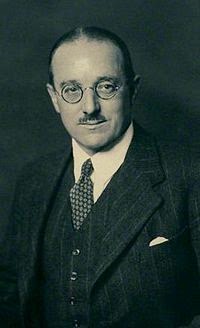
 William Arthur Heidel (1868-1941), a philosopher son of a preacher, makes these interesting observations. His booklet "The necessary and the contingent in the Aristotelian system (1896)" is a very lucid treatment of concepts (and percepts).
 We do not acquire absolute presuppositions by arguing; on the contrary, unless we have them already arguing is impossible to us. Nor can we change them by arguing; unless they remained constant all our arguments would fall to pieces. We cannot confirm ourselves in them by ‘proving’ them; it is proof that depends on them, not they on proof (An Essay on Metaphysics 1998: 173).
Collingwood (1940) made a distinction between presuppositions and assumptions. Presuppositions are non-justified implicit implications. They differ from assumptions because the latter are stated openly, are explicit, not implicit. We assume by an act of free will: ‘To assume is to suppose by an act of free will. A person who ‘makes an assumption’ is making a supposition about which he is aware that he might if he chose make not that but another. (…)’ (Collingwood 1940: 27) Presuppositions, however, work in the darkness. But they establish logical connections with the statements formulated in our explicit thought.Hyrkannen () p. 255 observes:

Atqui impossibilis omnino est talis adaequatio et commesuratio inter potentiam finitam et et obiectum infinitum. Ergo, pariter impossibile est infinitum ab intellecto finiti comprehendi.And White
...the finite mind is inadequate to grasp the infinite. SC108And Cusanus
Quoniam ex se manifestum est infiniti ad finitum proportionem non esse (De Docta Ignorantia, Cap iii)and Trithemius also echoes this argument, having resort to an interesting term "incircumscriptibilem":
Deum igitur nobis credere potius quae scire vel intelligere omnino necessarium fuit: propterea que penitus impossibile sit illam super divinam & incircumscriptibilem maiestatem comprehendi a nobis qui nihil intelligimus sine ministerio sensuum & discursu rationis. (Liber octo quaestionum ad Maximilianum Caesarem de fide et intellectu)and Lactantius:
incogitabiles... inextricabiles...inaestimabilem potestatem. Dubitet vero aliquis, an quidquam difficile aut impossibile sit Deo, qui tanta tamque mirifica opera providentia excogitavit, virtute constituit, ratione perfecit; nunc autem spiritu sustentet, potestate moderetur, inexcogitabilis, ineffabilis, et nulli alii satis notus quam sibi? (Divinarum Inst., lib i)But Arthur Eddington introduces a radically different account:
We have learnt that the exploration of the external world by the methods of physical science leads not to concrete reality, but to a world of symbols.Along the same lines James Jeans suggests,
The essential fact is simply that all the pictures which science now draws of nature, and which alone seem capable of according with observational fact, are mathematical pictures...They are nothing more than pictures – fictions if you like, if by fiction you mean that science is not yet in contact with ultimate reality.”