Showing posts with label Religion. Show all posts

System of Knowledge and Explanation

"Organized knowledge of a subject and the interrelationship of its various parts, is superior to disorganized knowledge – just as a beautiful garden arranged with beds of flowers, paths and rows of plants is superior to a chaotically overgrown forest...A person should always endeavour to grasp general principles...When a person understands one principle he automatically understands a great number of details."
Introduction to R. Moshe Luzzatto (Ramchal) Derech HaShem.

Wesley Salmon (Four Decades of Scientific Explanation, 1990) argues a description of what "explanation" is:
Wesley C. Salmon[explanations] show how empirical phenomena fits into a causal nexus (paraphrase p.121)... the explanation of events consists in fitting them into the patterns that exist in the objective world. When we seek an explanation, it is because we have not discerned some feature of the regular patterns; we explain by providing information about these patterns that reveals how the explanandum-events fit in.... explanation reveal the mechanisms, causal or other, that produce the [events] we are trying to explain. (p 121).  
The challenge is when we're aware that we don't know adequately or completely the regular patterns, or mechanisms that produce the events, and we know that we never will know them completely. 


The Gadol HaDor

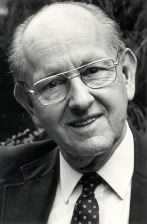
Image result for Moshe Feinstein
Moshe Feinstein
The Gadol HaDor is the greatest rabbi of his generation. This position is attained, not by a process or a career, but rather by consensus. The Gadol HaDor is the one able to respond the most difficult halakhic problems of his generation.

Each major Jewish group may have its own Gadol HaDor.

A list of indisputable Gedolim HaDor:


  • Moshe Feinstein (1895-1986)
  • Joseph Soloveitchik (1903-1993) ?
  • Aharon Lichtenstein (1933-2015) ?
  • Yosef Shalom Elyashiv (1910-2012)
  • Aharon Leib Shteinman (1914-2017)
  • Chaim Pinchas Scheinberg (1910-2012)
  • Ovadia Yosef (1920-2013) Sepharadi
  • Rashba (Shlomo ben Aderet) (1235–1310)
  • Shmayah (1st c. BCE)
  • Avtalyon (1st c. BCE)


References

De ars ignorandi

File:SebastianCastellio.jpgSebastian Castellio included curious but challenging aspects in the title to his treatise: De Arte dubitandi & confidendi, ignorandi, & sciendi published in Basel in 1563. I call attention to:

ars ignorandi: 'De ignorando hoc dico: ignorare nobis ea licet, quae homini non sunt ad salutem necessaria, quae multa esse nemo sapiens negabit' (p.50) and also 'Ignorare autem ea licet, quae nec a Deo praecepta, nec homini ad Deum cognoscendum officumve suum discendum aut faciendum iusticiaque fungendum, sun necessaria' (p.51).

Of course, these observations remind one of  1 Cor 2:2: Non enim judicavi me scire aliquid inter vos, nisi Jesum Christum, et hunc crucifixum.

References
  • Castellion, S. (1981). De arte dubitandi et confidendi, ignorandi et sciendi. Brill.
  • Castellion, S. (1953). De l'art de douter et de croire, d'ignorer et de savoir. Traduit de l'original Latin par Charles Baudouin. Genéve, Jeheber.
  • Calvetti, C. G. (2005). Il testamento dottrinale di Sebastiano Castellion e l'evoluzione razionalistica del suo pensiero. Vita e Pensiero.
  • For the disquisitions of Castellion on hazard, or chance, see Bru, B. (2006) The Bernoulli Code. J. Electronique d'Histoire des Probabilites et de la Statistique. 2, 1. Here